
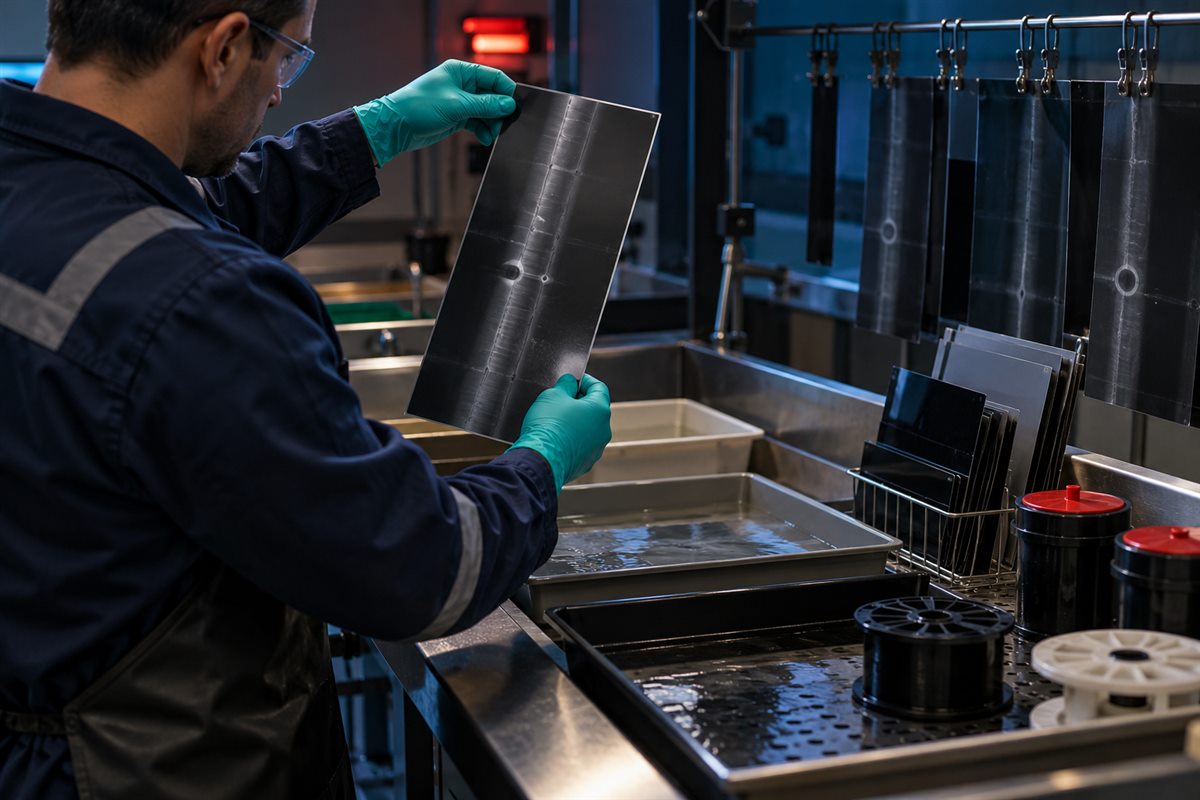
Radiographic film is photosensitive and can be damaged by contamination, pressure, bending, static discharge, light or inappropriate storage. A repeatable handling routine helps reduce preventable artifacts and keeps each film associated with the correct examination record.
Prepare a clean work area
Keep the loading surface clean, dry and free of dust, chemicals, sharp edges and unrelated items. Wash and dry hands, or use clean gloves compatible with the film and process. Handle film by its edges and avoid touching the emulsion area. Keep food, drink, oils, lotions and cleaning sprays away from the loading area.
Protect film from light and pressure
Open light-tight packaging only under the safelight conditions approved for the specific film and darkroom. Safelight color, filter, wattage, distance and exposure time are film-dependent: follow the manufacturer’s instructions and verify the actual setup. Do not assume a lamp is safe because it appears dim. Avoid bending, creasing, scraping, pressing or stacking heavy items on film. Keep film away from static-generating materials and unnecessary friction.
Load and identify carefully
Check the cassette or holder for cleanliness, damage and correct screen arrangement before loading. Match film size and orientation to the exposure plan. Verify that markers will not obscure the area of interest. Keep the identification and exposure sequence clear; use a controlled method to prevent film mix-ups during loading, transport and processing.
Move exposed film promptly and securely
Return loaded cassettes to their protective case and keep exposed film away from stray radiation, heat and moisture according to the product instructions. Transfer it for processing without unnecessary delay where the procedure or film guidance requires it. Record any suspected light leak, drop, wetting, pressure or handling event so the responsible examiner can decide how to proceed.
Quick pre-exposure check
- Correct film type, size and batch for the job.
- Clean, dry hands and a clean cassette interior.
- Safelight setup verified for this film.
- Light-tight closure checked and identification prepared.
- Film protected during transport and stored as directed.
Handling guidance differs among film products and environments. The current manufacturer data sheet and approved site procedure take precedence over generic tips.